Water Sustainability in Action: Final Effluent Line Cleansing
Innovative Access and Sustainable Jetting Solution for Final Effluent Line in Cornwall
We were recently appointed to carry out the cleansing and CCTV survey of a 700-metre final effluent pipeline (150–225mm) serving a treatment works in Cornwall. This project presented a number of logistical and environmental challenges from the outset.
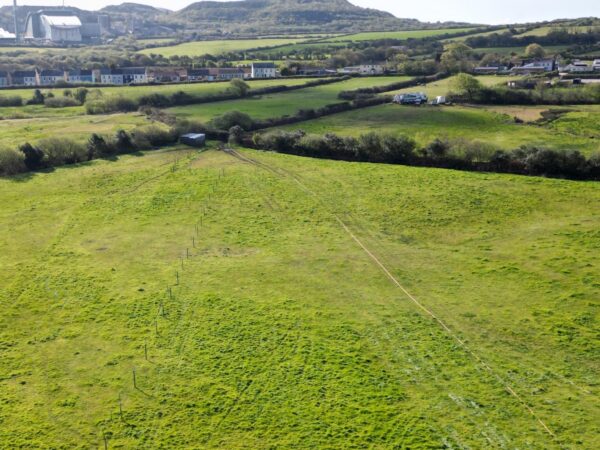
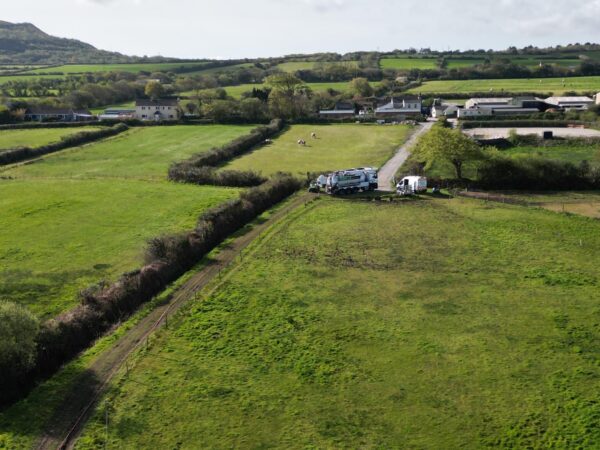
The pipeline ran through livery-yard fields, with manhole chambers located in remote positions, offering narrow, highly restricted access. Following an initial site-scoping visit, it was clear that a standard setup would not be feasible without careful planning and adaptation.
Overcoming Access Constraints
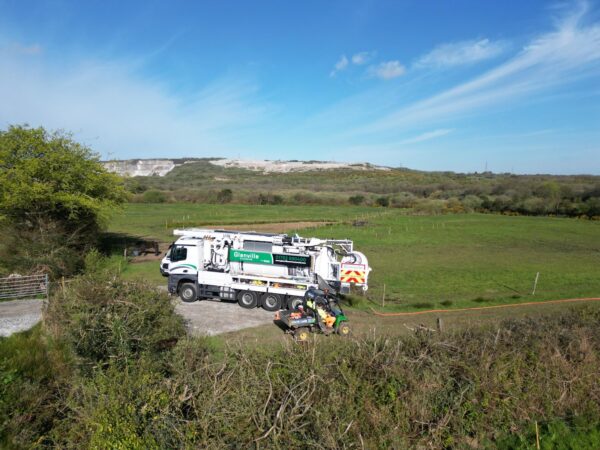
To safely and efficiently deliver the works, our team designed and installed a 100-metre-long, 4-metre-wide temporary HGV access route into the field. This allowed a jetvac unit to be positioned at a strategic central location, from which we could deploy extended jetting hoses and remote reels.
This configuration enabled us to:
- Reach access points up to 400 metres away from the JetVac unit
- Jet and cleanse up to 300 metres from multiple locations
- Successfully cover the entire 700-metre pipeline length
A Bespoke Water Management Approach
Under typical circumstances, we would position a recycling unit directly over each manhole, allowing jetting water to be recycled and significantly reducing potable water use. However, the distance between the manholes and the JetVac unit made this approach impractical on this occasion.
To avoid downtime and prevent delays caused by water shortages, a 3,000-gallon tanker was paired with the jetvac unit to provide a constant water supply throughout the works.
Driving Water Sustainability
In line with our water sustainability-led approach, we implemented an innovative solution to dramatically reduce potable water consumption.
Rather than filling the tanker from an approved hydrant, the tanker instead abstracted final effluent from the upstream discharge chamber of the very pipeline we were working on. This effluent was then used for jetting operations.
Final effluent performs identically to potable water in jetting and recycling operations and, crucially, it was already destined to be discharged through the pipeline.
Tangible Environmental Benefits
By adopting this approach, we successfully:
- Cleansed and surveyed the entire 700-metre pipeline
- Eliminated the need for potable water
- Saved approximately 35,000–40,000 gallons of water over seven days of works
This project is a strong example of how innovative planning, flexible methodology, and sustainable thinking can overcome challenging site conditions while delivering exceptional environmental outcomes.
If you’d like support with access-restricted sites, final effluent assets, or water-efficient cleansing solutions, our team would be happy to discuss your requirements.
email@glanvilleltd.co.uk