Structural Sewer Rehabilitation
Key Achievements
- <1 week delivery vs 2–3 weeks (≈75% programme saving)
- 40–60% cost saving vs excavation
- 75%+ carbon reduction
- 10–15 tonnes of waste avoided
- Zero disruption to access or highways
- Zero safety incidents
- 50+ year asset life extension
Project Overview
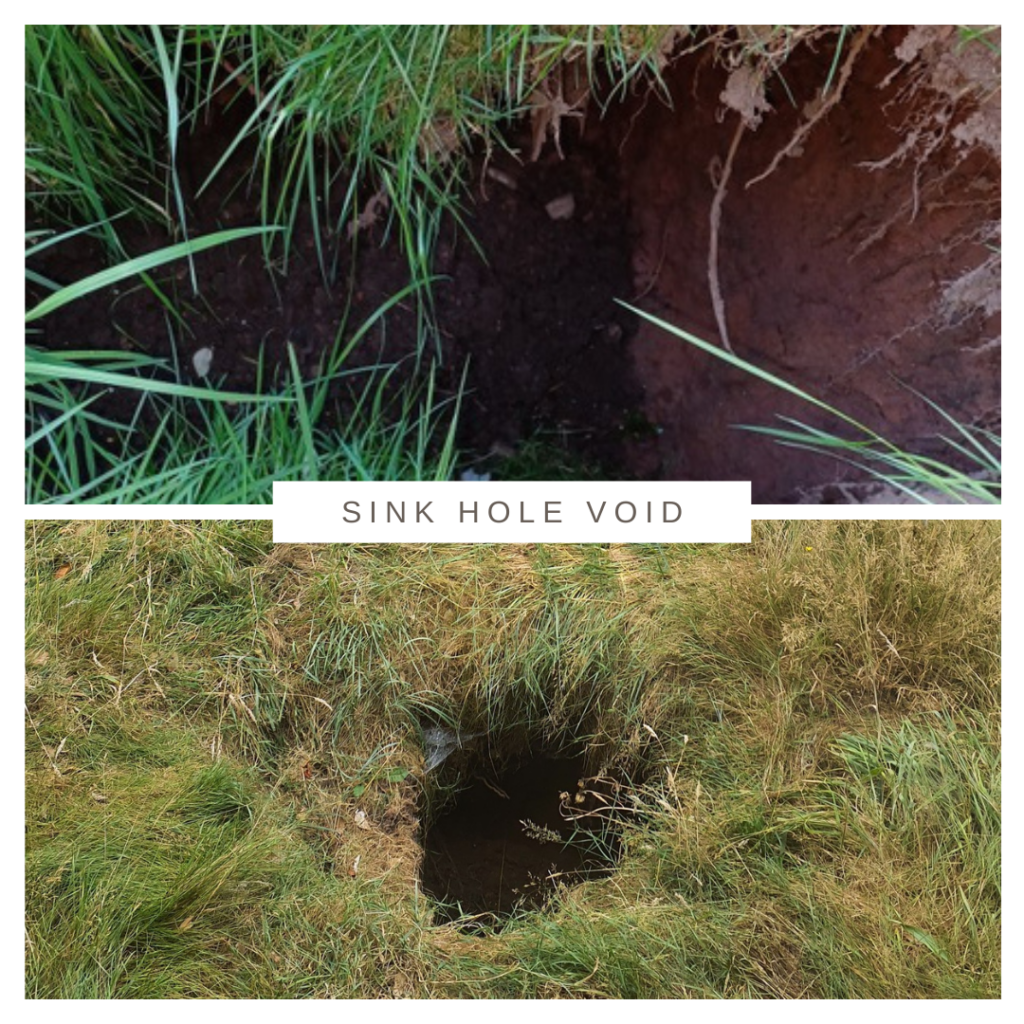
Glanville Environmental was commissioned to undertake emergency rehabilitation works to a deteriorating brick culvert serving a residential property at 1A Barnfield Crescent, Exeter, and an associated growing sinkhole.
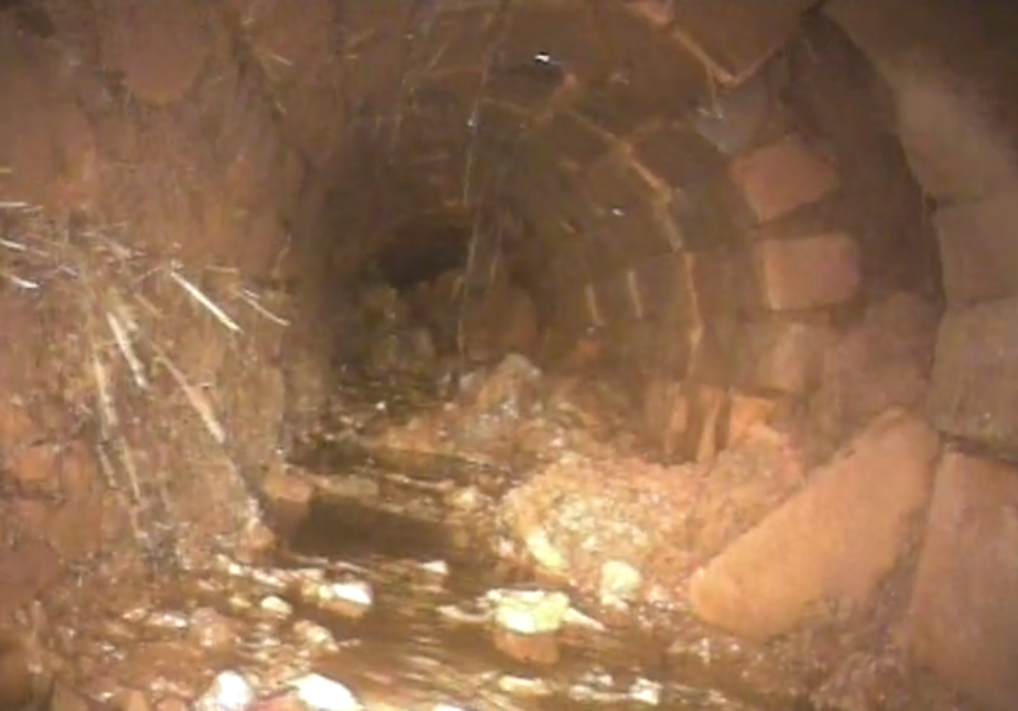
CCTV investigations identified a rapidly deteriorating asset, including root ingress, significant debris buildup, displaced brickwork, and a partial collapse with up to 85% cross-sectional loss, approximately 8.7m downstream. The survey was abandoned due to the severity of the collapse and a growing void, compounded by the potential risk of an unknown service.
In response to the culvert's fragile condition, our cleaning division adopted a sensitive approach, using controlled manual techniques rather than high-pressure jetting, to remove debris without exacerbating defects.
The situation presented an immediate risk of full structural failure, service loss, and ground instability affecting the property. Early intervention prevented escalation to full collapse and avoided significantly more disruptive and costly emergency excavation.
A trenchless solution was developed utilising multiple structural patch liners installed via Glanville’s bespoke packer to target defective sections precisely. Approximately 10 patch liners (560mm to 720mm diameter) were installed, restoring integrity while avoiding intrusive works.
Scheme
Structural Sewer Rehabilitation
Client
Kier NSA
Project objective
This programme delivered a large-scale, proactive investigation of drainage misconnections to support South West Water’s ongoing work to tackle them.
Value
£90,000
Divisions
CCTV, Trenchless

Project Management
The success of the scheme was driven by proactive planning, technical understanding, and strong collaboration.
The works were delivered within the programme in under one week, reducing the duration by approximately 75% compared to excavation, despite uncertainty and the defect's live nature. The targeted trenchless approach avoided permitting delays, excavation, and reinstatement.
Cost control was achieved through the intelligent selection of methodologies. Localised patch repairs ensured only defective sections were treated, delivering an estimated 40–60% saving compared to full replacement.
Collaboration between CCTV operatives, lining crews, and client stakeholders ensured a seamless transition from inspection to delivery. Open communication enabled proactive management of emerging risks, avoiding delay or dispute.
Quality was assured through pre- and post-installation surveys, confirming that all defects were addressed and the culvert’s structural integrity was restored.
Community Impact & Customer Care
The works were delivered within a sensitive residential setting, requiring careful management to minimise disruption and maintain customer confidence.
The trenchless approach was fundamental. By eliminating excavation, the team avoided breaking out hardstanding, restricting access, and introducing heavy plant.
Residents experienced minimal noise, dust, and inconvenience, with disruption reduced by over 75% compared to open-cut works. Access was maintained throughout, with no traffic management or prolonged site presence required.
Clear communication ensured that the resident understood the issue, the risks, and the solution. Given the potential severity of collapse, this transparency built trust and reassurance.
The result was a scheme that resolved a critical issue while prioritising the customer experience.
Legislative Compliance
The project was delivered in full compliance with all relevant health, safety, and regulatory requirements.
The works presented challenges including ground instability, confined-space operations, and live sewer conditions. These were addressed through comprehensive risk assessments and robust method statements.
All activities were undertaken in accordance with CDM Regulations, with clearly defined roles and strong supervision.
Safe systems of work were rigorously implemented, particularly for confined space entry and trenchless installation. Avoiding excavation significantly reduced exposure to high-risk activities, including deep excavations and collapse zones.
The scheme was completed with a zero-incident safety record, reflecting strong planning and on-site culture.
The Benefit
Sustainability
Sustainability was a key benefit of the trenchless solution.
Rehabilitating the existing culvert avoided excavation, removal, and reinstatement, delivering an estimated 75%+ carbon reduction alongside reduced material use, vehicle movements, and emissions.
The localised patch-lining approach ensured that only defective sections were treated, preventing approximately 10–15 tonnes of excavation and waste disposal.
Environmental disturbance was minimal, with no impact on surrounding ground, structures, or landscaping. Reduced noise and emissions further lowered the environmental footprint.
The works extend asset life by 50+ years, reducing the likelihood of future interventions and associated environmental impact.
Innovation
While patch lining is established, its application here demonstrates an effective response to a complex defect scenario.
The scheme addressed multiple defects within a short culvert section, including collapse, root ingress, voids, and displaced brickwork. Rather than full lining or excavation, a precision approach was adopted using multiple targeted repairs.
Glanville’s bespoke packer enabled accurate installation within the deteriorated brick culvert, overcoming challenges such as alignment issues, debris, and restricted access. Its adaptability to variable geometry ensured effective sealing and structural reinforcement. (Picture 3)
The solution also stabilised the surrounding void and mitigated risk to an unidentified service without disturbing ground conditions.
This delivered a cost-effective, low-impact, and technically robust outcome, demonstrating the value of targeted trenchless intervention.
Conclusion
The Barnfield Crescent project demonstrates how trenchless rehabilitation can address high-risk infrastructure failure in constrained environments.
Faced with a near-collapse scenario and active void formation, Glanville Environmental delivered a targeted solution that restored structural integrity, reduced programme and costs, minimised environmental impact, and maintained customer confidence.
The works were completed safely and efficiently, with zero incidents, demonstrating how trenchless technology can deliver measurable value across safety, sustainability, cost, and customer outcomes.