Drainage Misconnection Investigation
Key Achievements
- 359 property investigations completed across the South West
- 40 confirmed misconnections identified and resolved
- 224 suspected cases eliminated, preventing unnecessary works
- Non-intrusive methods avoided excavation, significantly reducing cost and programme duration
- Estimated 70%+ reduction in carbon impact vs traditional investigation methods
- Zero disruption to households, highways, or infrastructure
- Scalable model supporting proactive pollution prevention
Project Overview
This programme delivered a large-scale, proactive investigation of drainage misconnections to support South West Water’s ongoing work to tackle them.
Misconnections are a persistent and complex challenge, often occurring within private drainage systems that are poorly mapped or undocumented. These failures can result in untreated wastewater being discharged to watercourses or in unnecessary loading within the foul network.
Glanville Environmental implemented an integrated methodology that combined high-resolution CCTV surveying, controlled dye tracing, and geospatial analysis to accurately identify and verify drainage connectivity at the property level. This enabled the team to establish how drainage systems operate in practice rather than relying on often-inaccurate legacy records.
Designed to operate at scale within live residential environments, the programme balanced technical accuracy with customer engagement. Across 359 investigations, the programme confirmed 40 genuine misconnections and eliminated 224 suspected cases, enabling targeted intervention while avoiding unnecessary work.
Scheme
Drainage Misconnection Investigation
Client
South West Water
Project objective
This programme delivered a large-scale, proactive investigation of drainage misconnections to support South West Water’s ongoing work to tackle them.
Delivery Period
2025 - 2026
Divisions
CCTV
Programme Management
Asset Definition & Control
The programme demonstrates strong technical and operational control across a geographically dispersed asset base.
Delivery required coordination between survey teams, engineers, and client stakeholders while maintaining access to live properties and overall efficiency.
A structured workflow was implemented, beginning with pre-site intelligence using network records, historical data, and pollution alerts. This enabled targeted investigations, reducing time on site and improving accuracy.
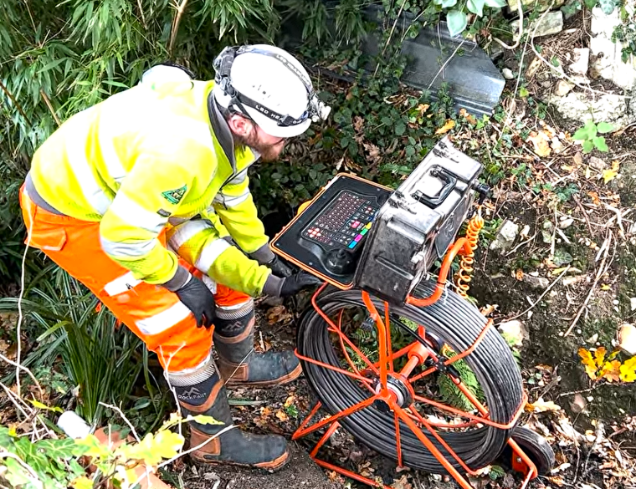
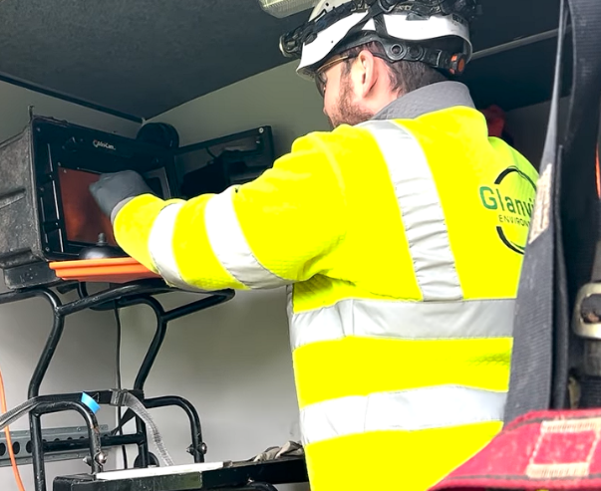
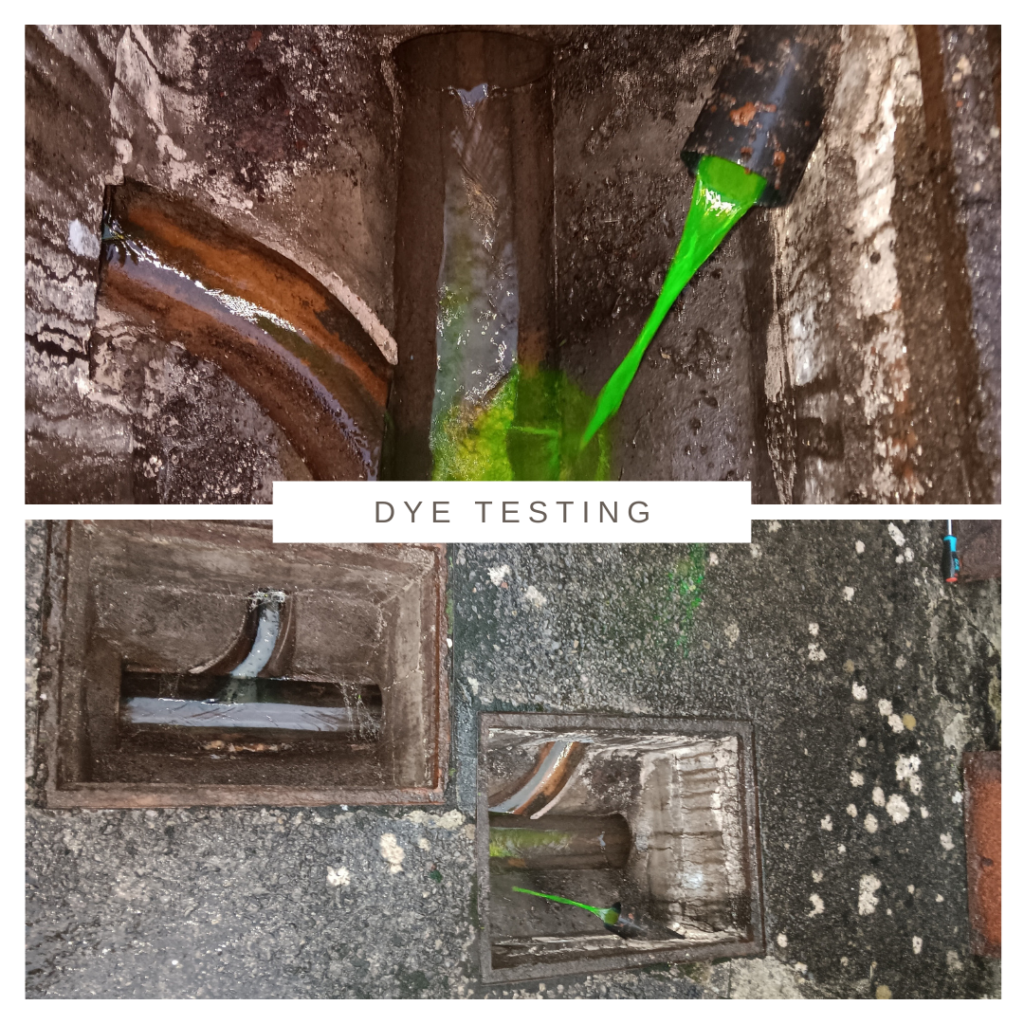
On-site, a consistent process combined visual inspection, network tracing, CCTV survey, and dye testing. Controlled dye testing provided definitive confirmation of flow routes, ensuring conclusions were based on direct evidence.
The use of non-intrusive methods eliminated the need for excavation, reinstatement, and traffic management, significantly reducing programme duration and cost. The ability to confidently rule out compliant systems avoided unnecessary follow-on work, representing a major efficiency gain.
Close collaboration with South West Water ensured aligned objectives, rapid decisions, and effective customer management throughout.
Community Impact & Customer Care
The programme required direct engagement with residents, many of whom were unaware of potential drainage issues.
A clear and structured communication approach ensured customers understood the purpose of investigations, findings, and any required actions. This was critical where responsibility for misconnections rests with property owners.
From a delivery perspective, trenchless and non-intrusive techniques ensured investigations were completed without disruption. There was no requirement for excavation, heavy plant, or road closures.
As a result, work was carried out with minimal noise, no access restrictions, and no impact on highways, significantly improving the customer experience compared to traditional investigative methods.
This approach transformed a potentially disruptive compliance activity into a collaborative pollution-prevention initiative, supporting positive relationships with customers.
Legislative Compliance
All works were delivered in full compliance with relevant legislation, including CDM Regulations 2015 and South West Water procedures.
The methodology reduced risk exposure compared to traditional approaches. Avoiding excavation removed hazards associated with underground services and open excavations, while CCTV reduced the need for confined-space entry.
Where confined space entry was required, it was controlled through established safe systems, trained personnel, and appropriate monitoring.
Dye testing was carefully managed using non-hazardous materials and controlled application to ensure environmental protection.
The programme maintained a strong health and safety record, reflecting effective planning and competent delivery.
The Benefit
Sustainability
Sustainability benefits were achieved through both environmental outcomes and delivery methods.
By identifying and resolving misconnections, the programme directly prevented untreated wastewater from entering watercourses, supporting long-term ecological protection.
The use of non-intrusive techniques significantly reduced environmental impact. Avoiding excavation eliminated spoil, material imports, and reinstatement, contributing to an estimated 70%+ carbon reduction compared to traditional methods.
Accurate diagnostics ensured resources were targeted only where required, avoiding unnecessary work and associated carbon expenditure.
This targeted, preventative approach supports improved network performance and long-term environmental sustainability.
Innovation
This project demonstrates an innovative application of detection, location, and inspection technologies through a scalable methodology.
Technical Innovation in Detection
By combining CCTV with real-time dye tracing, the programme created an accurate representation of drainage systems in operation. This shifted inspection from passive observation to active verification, in which flow pathways are proven rather than assumed.
Evidence-Based Verification
CCTV footage, dye testing, and reporting provided clear, auditable evidence of connectivity. This reduced uncertainty and enabled confident decision-making.
Importantly, confirming compliant systems was treated as equally valuable as identifying defects, preventing unnecessary intervention and focusing investment effectively.
Integrated Delivery Approach
The programme successfully combined technical investigation with customer engagement, ensuring access, cooperation, and action. This integration enabled efficient delivery at scale.
Scalable Industry Model
The need for efficient investigation and response to pollution alerts is clear. This programme establishes a repeatable model that can be applied across regions, supporting a shift from reactive response to proactive pollution prevention.
Conclusion
The Drainage Misconnection Investigation & Pollution Prevention Programme demonstrates how integrated detection and inspection techniques can address a complex and widespread industry challenge.
By combining CCTV surveying, dye tracing, and customer engagement, Glanville Environmental and South West Water have delivered a programme that identifies hidden pollution pathways, provides auditable evidence, and enables targeted intervention.
Delivered efficiently, with minimal disruption and reduced environmental impact, this project highlights how trenchless inspection technologies can move beyond diagnosis to deliver measurable environmental and operational benefits at scale.